Projector
Explore Business Projector
Professional Installation Exhibition & Simulation Conference Room Meeting Room Education ProjectorsMonitor
Lighting
Interactive Display | Signage
Cookie Setting
How can I change my BenQ cookie settings?
Page updated: May 2020
Some essential features on BenQ sites just won’t work without cookies. And having other cookies switched off can seriously affect the way you’ll be able to enjoy our services.
Please check your cookie settings below and turn on any cookies you’re happy with.
“Strictly necessary” cookies can’t be turned off. But Functional and Performance cookies can be turned on or off below. You can learn more about cookies and what they do on our other pages.
If you've chosen to block third-party cookies on your browser, your cookie preferences won't carry over from benq.eu to benq.xx and vice versa. Please make sure to set your cookie preferences in both places.
On
Strictly necessary cookies
These cookies are essential so that you can move around the website and use its features. Without these cookies services you have asked for cannot be provided.
On
Off
Functional cookies
These cookies allow the website to remember choices you make to give you better functionality and personal features.
On
Off
Performance cookies and advertising cookies
Performance cookies
These cookies help to improve the performance of BenQ. If you want to opt-out of advertising cookies, you have to turn-off performance cookies. We also use Google Analytics, SessionCam and Hotjar to track activity and performance on the BenQ website. You can control the information provided to Google, SessionCam and Hotjar. To opt out of certain ads provided by Google you can use any of the methods set forth here or using the Google Analytics opt out browser add-on here. To opt-out of SessionCam collecting data, you can disable tracking completely by following link:https://sessioncam.com/choose-not-to-be-recorded/. To opt-out of Hotjar collecting data, you can disable tracking completely by following link:https://www.hotjar.com/privacy/do-not-track/.
Advertising cookies
These cookies are used to track your activity on the BenQ website and other websites across the Internet, help measure the effectiveness of our advertising campaign and deliver advertisements that are more relevant to you and your interests. We use various advertising partners, including Amazon, Facebook, and Google. These cookies and other technologies capture data like your IP address, when you viewed the page or email, what device you were using and where you were. You can find out how to avoid them below.
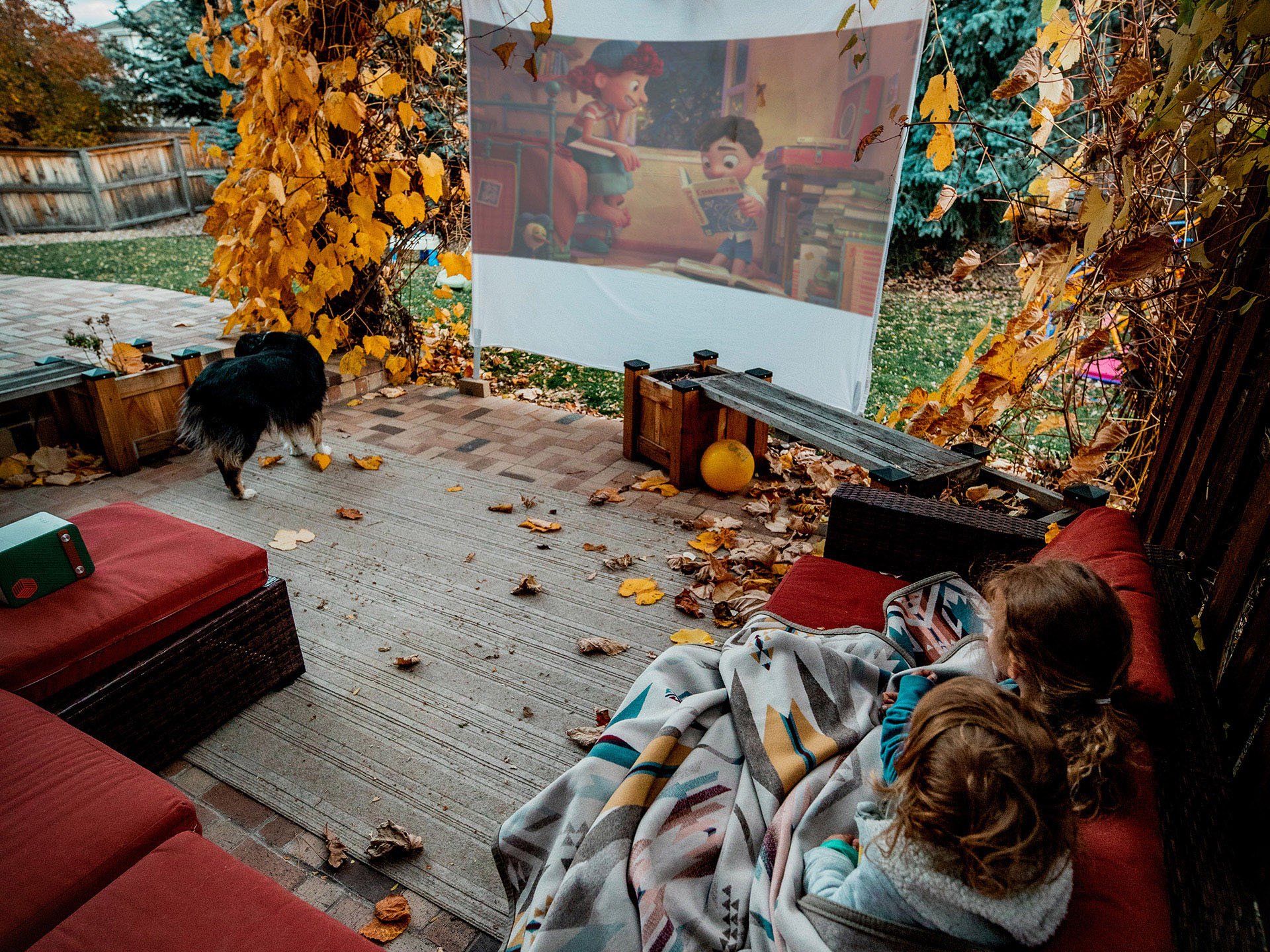
Think projectors only work at night or in dark home theaters? Not quite. With enough brightness, typically 500 lumens or more, you can enjoy clear and vivid images outdoors even during the day. Whether you're camping, picnicking, or relaxing in the backyard, some projectors including portable ones are bright enough to make daylight viewing possible. The key is having enough brightness and viewing conditions!
Brightness is an important factor when using a projector during the day. Since projectors rely on reflected light, strong ambient lighting can easily wash out the image. That’s why lumen ratings, which measure how much light a projector can produce, are often a key spec to consider.
However, brightness isn’t everything. A projector that might struggle in direct sunlight could still look great in a shaded spot or under overcast skies. For example, full daylight can reach over 10,000 lux, but an overcast day drops to around 1,000. By choosing a shaded area, using a high-quality screen, or watching closer to sunset, even a projector with moderate brightness can perform surprisingly well. If you want to understand more about how projector brightness works, this article breaks it all down.
Table Source: www.TheEngineer ToolBox.com
So while brightness is important, the way you set up your space often makes an even bigger difference.
As mentioned earlier, where and when you watch can make just as much impact as brightness itself. For small gatherings in shaded areas or around dusk, a projector with 500 to 1,000 lumens usually delivers a clear and enjoyable image. A portable model, with 500 ANSI lumens and a compact design, is perfect for these relaxed, low-light setups.
In brighter conditions such as early evening or partially shaded spaces, you’ll want at least 2,000 lumens to maintain image clarity and visibility. The home entertainment model, with over 2,000 ANSI lumens and 4K resolution, is a reliable option when there's still some ambient light to compete with.
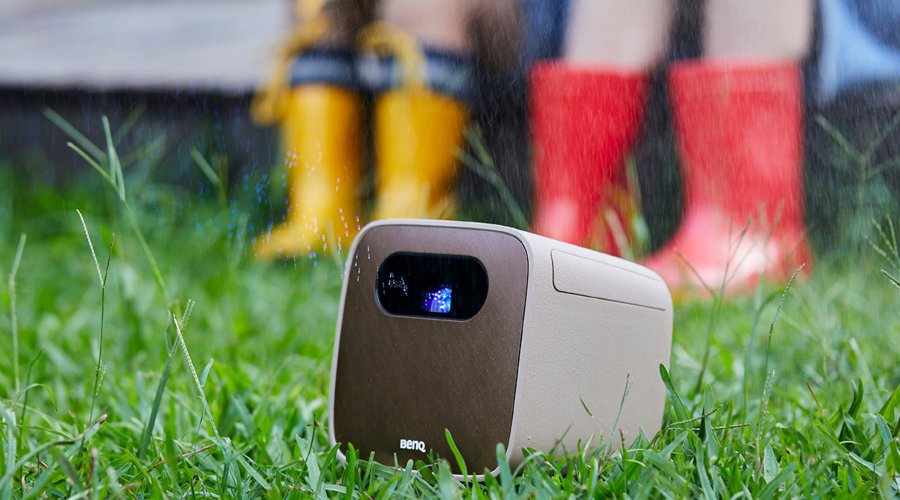
When you're planning an outdoor movie night, portability can make all the difference. A compact projector is easier to carry, set up, and store. Many portable models come with built-in batteries, so you can watch anywhere without needing a power outlet. They’re perfect for parks, campsites, or any cozy corner of your backyard.
A good portable projector does more than just save space. Built-in 2.1-channel speakers mean you don’t need to pack extra audio gear, and thoughtful design details like carry handles or storage kits make setup simple and quick.
Connectivity is just as important. Look for projectors that offer HDMI, USB Type-A and Type-C, along with Wi-Fi and Bluetooth. These features allow you to connect with a wide range of devices, such as gaming consoles, streaming sticks, smartphones, and even RV audio systems. Many portable projectors also come with Android TV pre-installed, so you can stream Netflix, YouTube, Prime Video, and more directly from the projector without extra equipment.
If your backyard has access to power outlets, you can also consider projectors without a built-in battery. While these models do not include a battery, they offer higher brightness and better image quality, making them a great choice when performance is your top priority.
Even the best projector needs the right environment to shine. A few simple choices can make a huge difference in how clear and immersive your backyard movie night.
Find some shade. Direct sunlight is a challenge for any projector. Setting up near trees, under a canopy, or even using umbrellas can help reduce glare and keep the image looking crisp.
Choose the right time. Avoid projecting between 11 a.m. and 2 p.m. when sunlight is strongest. Late afternoon, just before sunset, or early morning are much better times to get a bright, visible image without straining your projector. Nighttime still delivers the best results, but you don’t have to wait until it’s pitch dark to start watching.
Pick a good screen. A real projection screen reflects light way better than a blank wall or bed sheet. You’ll get deeper contrast and better color, especially when there’s still some daylight.
With a little planning, your backyard can feel just like a movie theater with no ticket required!
{{item.productWordingTag}}
{{currency}}{{item.finalPrice| numberThousandsCommas | numberDecimalPoint}} Save {{currency}}{{item.saveAmount | numberThousandsCommas | numberDecimalPoint}} Save {{item.savePercent | numberThousandsCommas | numberDecimalPoint}}%
new device price{{currency}}{{item.regularPrice| numberThousandsCommas | numberDecimalPoint}}