BenQ respect your data privacy. We use cookies and similar technologies to ensure you get the best experience when visiting our website. You can either accept these cookies by clicking “Accept Cookies”, or click “Only Required Cookies” to refuse all non-essential technologies. You can customise your cookie settings here at any time. For further information, please visit our Cookie Policy and our Privacy Policy.
Page updated: May 2020
Some essential features on BenQ sites just won’t work without cookies. And having other cookies switched off can seriously affect the way you’ll be able to enjoy our services.
Please check your cookie settings below and turn on any cookies you’re happy with.
“Strictly necessary” cookies can’t be turned off. But Functional and Performance cookies can be turned on or off below. You can learn more about cookies and what they do on our other pages.
If you've chosen to block third-party cookies on your browser, your cookie preferences won't carry over from benq.eu to benq.xx and vice versa. Please make sure to set your cookie preferences in both places.
On
These cookies are essential so that you can move around the website and use its features. Without these cookies services you have asked for cannot be provided.
On
Off
These cookies allow the website to remember choices you make to give you better functionality and personal features.
On
Off
Performance cookies
These cookies help to improve the performance of BenQ. If you want to opt-out of advertising cookies, you have to turn-off performance cookies. We also use Google Analytics, SessionCam and Hotjar to track activity and performance on the BenQ website. You can control the information provided to Google, SessionCam and Hotjar. To opt out of certain ads provided by Google you can use any of the methods set forth here or using the Google Analytics opt out browser add-on here. To opt-out of SessionCam collecting data, you can disable tracking completely by following link:https://sessioncam.com/choose-not-to-be-recorded/. To opt-out of Hotjar collecting data, you can disable tracking completely by following link:https://www.hotjar.com/privacy/do-not-track/.
Advertising cookies
These cookies are used to track your activity on the BenQ website and other websites across the Internet, help measure the effectiveness of our advertising campaign and deliver advertisements that are more relevant to you and your interests. We use various advertising partners, including Amazon, Facebook, and Google. These cookies and other technologies capture data like your IP address, when you viewed the page or email, what device you were using and where you were. You can find out how to avoid them below.
BenQ respect your data privacy. We use cookies and similar technologies to ensure you get the best experience when visiting our website. You can either accept these cookies by clicking “Accept Cookies”, or click “Only Required Cookies” to refuse all non-essential technologies. You can customise your cookie settings here at any time. For further information, please visit our Cookie Policy and our Privacy Policy.
Projector
Explore Business Projector
Professional Installation Exhibition & Simulation Conference Room Meeting Room Education ProjectorsMonitor
Lighting
Interactive Display | Signage
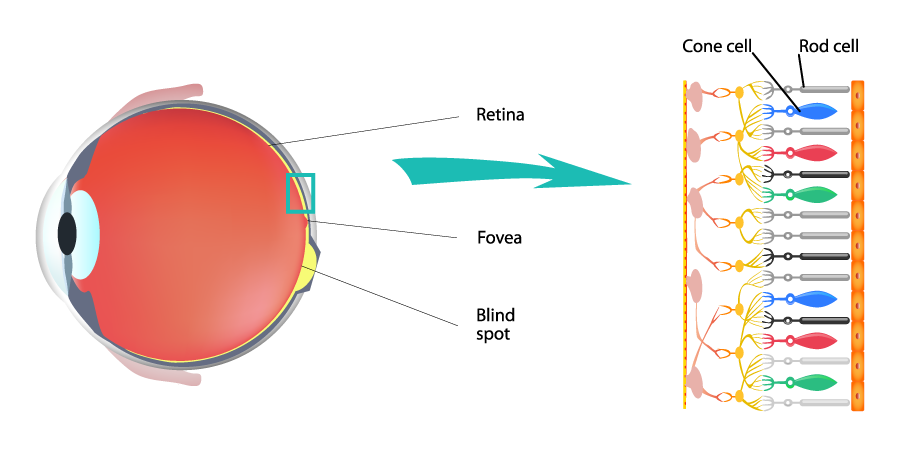
There are two types of cells in the retina of our eye that are responsible for our perception of color: rod and cone. Cones, which are sensitive to color, function best in bright light. They exist in three forms, each differing in the wavelength of light absorbed ( LMS ). Rods, on the other hand, are sensitive to the intensity of light. In the human eye, rod cells allow us to distinguish and detect objects in the dark; however, since their sensitivity to light is better than cone cells, our ability to perceive the color of objects in an area of low light becomes poor.
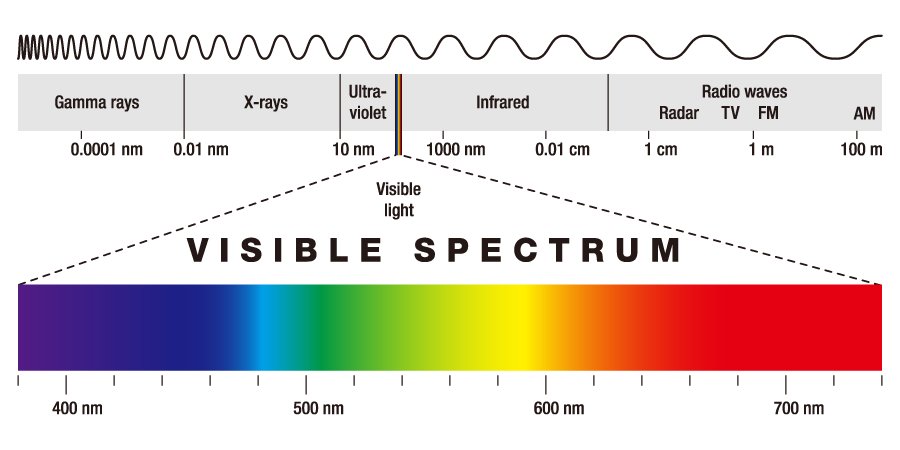
Color perception requires light. When light strikes objects, some are absorbed and some are reflected. The resulting color seen by the viewer is due to the reflected wavelengths. Wavelengths that can be seen by the human eye belong to the visible light portion of the electromagnetic spectrum. The colors range from short wavelengths to long wavelengths, starting with purple, followed by blue, green, yellow, orange, and ending with red.
Since there are slight biological variations between people, the way we perceive colors and recognize colors will vary, too. Hence, determining an object’s color becomes subjective. For example, take this box on the below, some may refer to its color as blue, some may say it appears green, and for the color critical person, they may say cyan. To provide an accurate description of an object’s color would be highly impossible for the average individual.
We must rely on quantitative methods to accurately communicate and document an object’s color. Color space is the term we use to collectively define the range of colors that is displayed on monitors, produced by printers, or that can be captured by cameras, to name a few. Commonly used color spaces include RGB, CMYK, HSV, CIEXYZ, CIEL*a*b*.
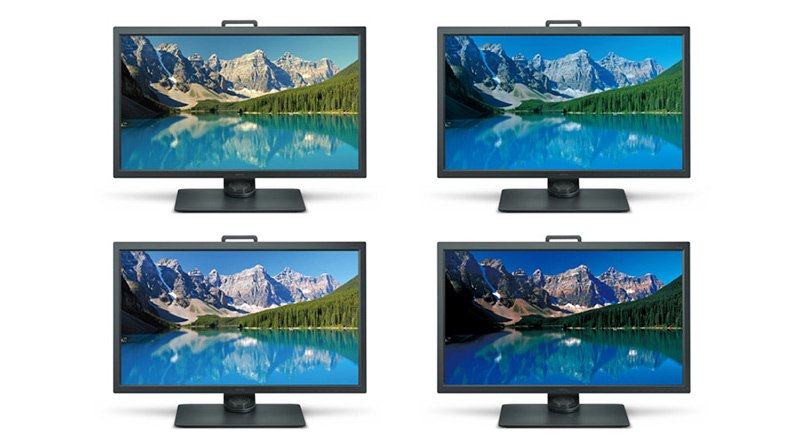
True color, then, is an accurate color representation of the original image in reality.
Thanks for your feedback!