Page updated: May 2020
Some essential features on BenQ sites just won’t work without cookies. And having other cookies switched off can seriously affect the way you’ll be able to enjoy our services.
Please check your cookie settings below and turn on any cookies you’re happy with.
“Strictly necessary” cookies can’t be turned off. But Functional and Performance cookies can be turned on or off below. You can learn more about cookies and what they do on our other pages.
If you've chosen to block third-party cookies on your browser, your cookie preferences won't carry over from benq.eu to benq.xx and vice versa. Please make sure to set your cookie preferences in both places.
On
These cookies are essential so that you can move around the website and use its features. Without these cookies services you have asked for cannot be provided.
On
Off
These cookies allow the website to remember choices you make to give you better functionality and personal features.
On
Off
Performance cookies
These cookies help to improve the performance of BenQ. If you want to opt-out of advertising cookies, you have to turn-off performance cookies. We also use Google Analytics, SessionCam and Hotjar to track activity and performance on the BenQ website. You can control the information provided to Google, SessionCam and Hotjar. To opt out of certain ads provided by Google you can use any of the methods set forth here or using the Google Analytics opt out browser add-on here. To opt-out of SessionCam collecting data, you can disable tracking completely by following link:https://sessioncam.com/choose-not-to-be-recorded/. To opt-out of Hotjar collecting data, you can disable tracking completely by following link:https://www.hotjar.com/privacy/do-not-track/.
Advertising cookies
These cookies are used to track your activity on the BenQ website and other websites across the Internet, help measure the effectiveness of our advertising campaign and deliver advertisements that are more relevant to you and your interests. We use various advertising partners, including Amazon, Facebook, and Google. These cookies and other technologies capture data like your IP address, when you viewed the page or email, what device you were using and where you were. You can find out how to avoid them below.
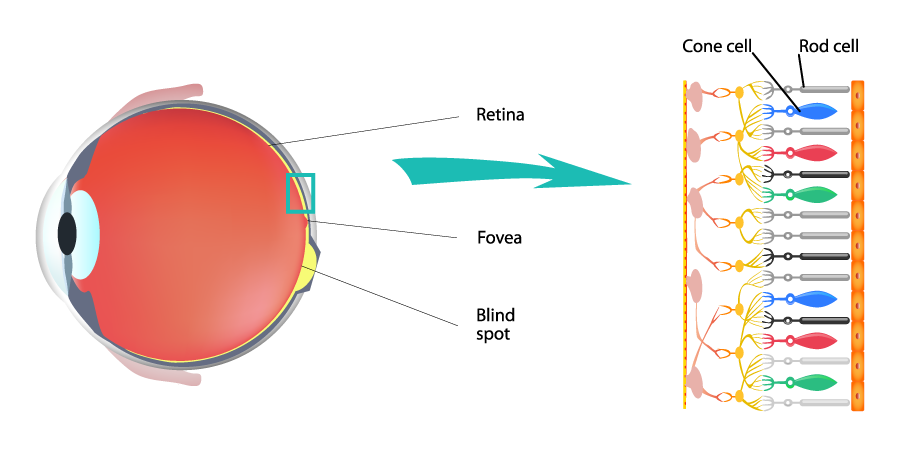
我們眼睛的視網膜中有兩種類型的細胞負責我們對顏色的感知:桿狀細胞和錐狀細胞。 錐體對顏色很敏感,在強光下效果最好。 它們以三種形式存在,每種形式的吸收光波長 (LMS) 不同。 另一方面,桿對光的強度很敏感。 在人眼中,桿狀細胞使我們能夠在黑暗中區分和檢測物體; 然而,由於它們對光的敏感度優於視錐細胞,因此我們在弱光區域感知物體顏色的能力變差。
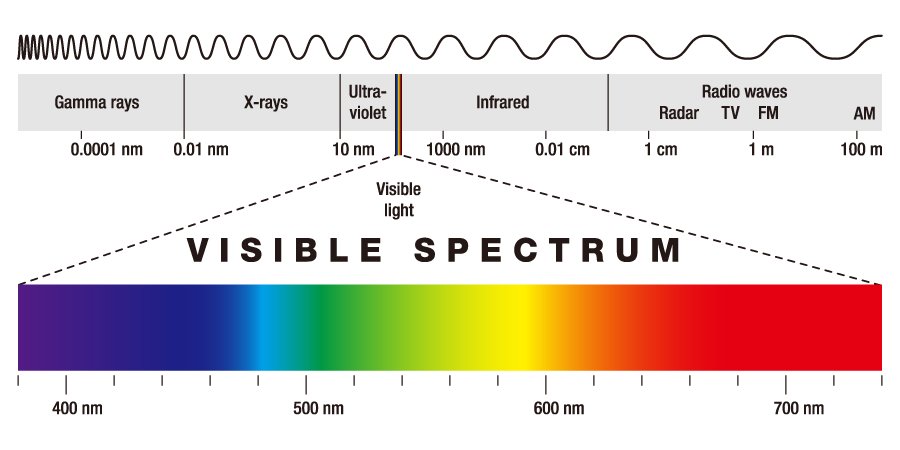
顏色感知需要光。 當光線照射到物體上時,有些會被吸收,有些會被反射。 觀察者看到的最終顏色是由於反射波長造成的。 人眼可見的波長屬於電磁波譜的可見光部分。 顏色範圍從短波到長波,從紫色開始,然後是藍色、綠色、黃色、橙色,最後是紅色。
由於人與人之間存在輕微的生物學差異,我們感知顏色和識別顏色的方式也會有所不同。 因此,確定物體的顏色變得主觀。 比如下面這個盒子,有人說它的顏色是藍色的,有人說是綠色的,對顏色挑剔的人可能說是青色。 對於普通人來說,要準確描述物體的顏色是非常不可能的。
我們必須依靠定量方法來準確地傳達和記錄物體的顏色。 色彩空間是我們用來共同定義在顯示器上顯示、由打印機產生或可由相機捕捉的顏色範圍的術語,僅舉幾例。 常用的色彩空間包括 RGB、CMYK、HSV、CIEXYZ、CIEL*a*b*。
因此,真彩色是現實中原始圖像的準確顏色表示。
Thanks for your feedback!